
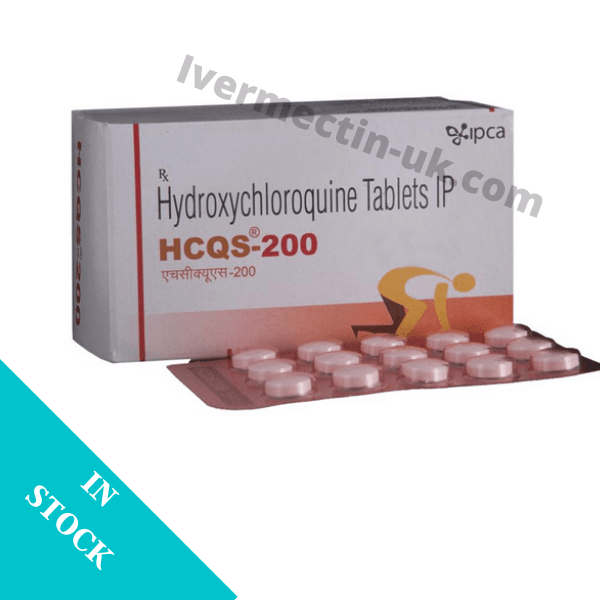
Hydroxychloroquine is a quinolone medicine used for treating and preventing malaria. It is also used as a disease-modifying anti-rheumatic drug (DMARD) to treat autoimmune diseases. It comes in the form of oral tablets that you can only buy through a prescription. It is also available under the brand name Plaquenil among others. It is also available in a generic version, but in some cases, you may not find it in every dosage strength or form as its brand-name alternatives. It is also used as combination therapy along with other drugs.
It is an immunomodulatory drug used for 60 years to treat malaria and autoimmune diseases like inflammatory arthritis and systemic lupus. Nowadays, it is also used for treating antiphospholipid syndrome, juvenile idiopathic arthritis, and primary Sjogren’s syndrome. Hydroxychloroquine can lower the mortality rates of patients with lupus erythematosus. It is also known to reduce the risk of lupus nephritis.
In some cases, Hydroxychloroquine is consumed along with Doxycycline to prevent malaria.
The WHO does not recommend using Hydroxychloroquine for Covid-19. However, it was in clinical trials initially; WHO later pulled it out as the results were not promising. Hydroxychloroquine does not lower the mortality rates in COVID-19 or the need for mechanical ventilation by patients. Using Hydroxychloroquine for covid-19 leads to more unwanted effects than a placebo.
The exact mechanism of HCQ is not known completely, but there are several hypotheses about how it works.
For malaria: The primary theory behind its effectiveness against malaria lies in its ability to block the detoxification process in the plasmodium parasites.
The malaria parasites (plasmodium) first invade the RBC and then ingest hemoglobin from the cytosol into the food vacuole. Then it uses the decomposed hemoglobin for synthesizing amino acids proteins for its growth. The decomposed hemoglobin (consists of ferriprotoporphyrin IX (FPIX) haematin) eventually transformed into nontoxic crystallized polymers named hemozoin.
The food vacuole is a lysosomal isolated acidic compartment, and the HCQ is a weak alkaline. As a result, HCQ diffuses the vacuole membrane and turns itself into a protonated form, which the parasite cannot diffuse out.
The accumulated HCQ in the food vacuole destabilizes the FPIX, thereby inhibiting its polymerization, and inducing parasite cell lysis.
Another theory suggests that HCQ targets the nucleus, not the lysosome. It can directly interact or bind to the parasite’s DNA and RNA and inhibits its replication and transcription process.
For autoimmune diseases: Researchers state that CQ/HCQ can affect the activity of lysosomes and autophagosomes. These organelles are responsible for antigen processing, presentation, and autoimmune activation.
Hydroxychloroquine accumulates in lysosomes and increases the intra-lysosomal PH. As a result, it impairs lysosomes and autophagosomes’ ability to mature, thereby inhibiting autoimmune activation.
Some studies say HCQ can modify the lysosomal function by clocking the fusion between lysosome and autophagosome.
Some common side effects of Hydroxychloroquine include nausea, vomiting, diarrhea, loss of appetite, headache, and dizziness. Although these side effects are less severe, you must contact your doctor if the symptoms persist or worsen.
Dosing information (Usual dose- may vary among individuals)
For Malaria (Areas where Chloroquine resistance is not reported)
Adults: 400mg salt orally once a week (310 mg base)
Weight-based Dose: 6.5 mg/kg salt (5 mg/kg base)
Maximum Dose: 400 mg
For malaria (for uncomplicated malaria)
Adults: 800 mg salt (620 mg base) as an initial dose, followed by 400 mg salt (310 mg base) at 6, 24, and 49 hours.
Total dose: 2000 mg salt (1550 mg base)
Weight-base dose:
1st dose: 13 mg/kg salt
2nd dose: 6.5 mg/kg salt after 6 hours of the first dose
3rd dose: 6.5mg/kg salt after 24 hours of the first dose
4th dose: 6.6 mg/kg salt after 48 hours of the first dose
Maximum dose:
Initial dose: 800 mg salt
2nd, 3rd, and 4th dose: 400mg salt
For Systemic Lupus Erythematosus:
200 mg to 400 mg salt divided into 1 or 2 doses
For Rheumatoid Arthritis:
1st Dose: 400-600 mg salt divided into 1 or 2 doses
Maintenance dose: 200-400 mg salt divided into 1 or 2 doses
Maximum Dose: 600 mg salt or 6.5 mg/kg salt (whichever is lowest)
The dosage mentioned above is a generalized version and should not be taken by adult patients without consulting a doctor. The Hydroxychloroquine dosage for pediatric purposes must be strictly prescribed by a physician.